Caring for Someone After a Stroke at Home
Coming home after a stroke is both a relief and a significant adjustment. Your loved one has survived a critical health event, but now the real work of recovery begins, and much of it will happen within the walls of your own home. This is rarely the moment anyone feels fully prepared, yet families across the UK navigate this transition every day.
The hospital team will have provided guidance before discharge, but what happens next can feel overwhelming. This guide covers what to expect when caring for someone after a stroke at home, what stroke care services cover, and what support actually looks like when someone is recovering from a stroke.
Understanding the Hospital Discharge Process
Before leaving the hospital, your relative will have a discharge meeting with the multidisciplinary team. This typically includes a nurse, physiotherapist, occupational therapist, and speech and language therapist. They will assess what your family member can manage independently and what areas require support.
You should receive a discharge summary detailing medications, GP appointments, and any therapy recommendations. The hospital may arrange a referral to community stroke services through the NHS. Some areas offer early supported discharge, meaning a therapist visits your home for the first few weeks to monitor progress and adjust the care plan as needed.
Ask the hospital team directly what your relative can and cannot do yet. Can they wash themselves? Use stairs? Prepare meals? Are there activities that will improve their recovery? Understanding this baseline prevents both dangerous overstretching and unnecessary restriction of their independence.
Personal Care and Daily Living
After a stroke, even routine tasks become complex. Depending on the severity and which side of the brain was affected, your relative may struggle with balance, coordination, sensation, or muscle strength on one side of their body.
Washing, dressing, and toileting may require hands-on assistance or supervision. A person who was independent before the stroke may feel vulnerable and embarrassed needing help with these intimate tasks. They need someone patient, respectful, and trained to do this safely without causing them harm or distress.
Meal preparation also becomes a safety issue. Your relative may have difficulty standing for long periods, gripping objects, or using their affected side. They still need nutritious, appealing meals prepared daily. If swallowing is affected, textures may need modification. This is not something most family members can sustain while also working, caring for children, or managing their own health.
Mobility and Fall Prevention
Falls are a serious risk after a stroke. Balance is impaired, confidence is shaken, and muscle weakness makes recovery from a fall much harder. Your home may need adaptations such as grab rails in the bathroom, better lighting, removal of trip hazards, or a raised toilet seat.
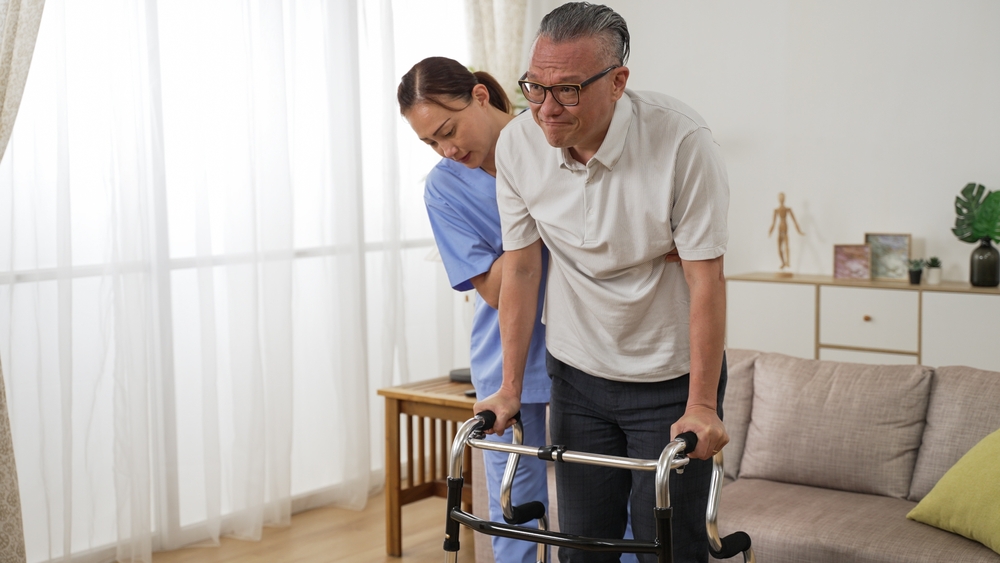
Your relative will likely need encouragement and sometimes physical support to move safely from room to room. This might include walking practice with a stick or frame, or assistance transferring from a bed or chair. A trained carer can spot when they are becoming fatigued, prevent overbalancing, and respond quickly if they do fall.
Regular movement and exercise are crucial for stroke recovery. The brain rewires itself through repetition. If your relative sits passively because they fear falling or because no one is there to support them, their recovery slows. They need someone available throughout the day who understands safe handling and encourages gentle activity.
Medication Management and Health Monitoring
After a stroke, medication regimens become complex. Blood pressure control, anticoagulation, cholesterol, and blood sugar management are all critical to preventing another stroke. Missing doses or taking the wrong medication at the wrong time can be dangerous.
Your relative may also have cognitive effects from the stroke that make it harder to remember when to take tablets or whether they have already taken them today. A responsible carer can check doses, administer medication with water, and keep accurate records that you and the GP can review.
Health monitoring matters too. Is their blood pressure staying controlled? Are they eating enough? Are they sleeping properly? Are they showing signs of infection or other complications? Someone present in the home notices these details and can alert you or the GP before a small problem becomes a crisis.
Communication Support and Aphasia
If the stroke affected the language areas of the brain, your relative may experience aphasia. This means they struggle to find words, understand speech, or both.
A carer who understands aphasia learns to speak slowly and clearly, to use gestures and written words, and to give their relative time to process and respond. This is not just kind. It enables your relative to make decisions, express needs, and stay engaged with their life.
Many people with aphasia benefit from speech and language therapy, which can begin as soon as they are home. A carer supports this by practising exercises the therapist recommends and encouraging communication rather than doing everything for them.
The Emotional and Psychological Reality
Recovery from stroke is not just physical. Depression is common after stroke, affecting around 30% of survivors. Your relative may grieve the loss of abilities they took for granted. They may feel angry, anxious, or afraid that another stroke could happen at any moment.
They need companionship and presence, not just technical care. Someone to sit with them, listen, encourage them through difficult rehabilitation exercises, and remind them gently that improvement is possible even when progress feels slow. A professional carer can provide this.
Family relationships can become strained when a spouse or adult child becomes the sole caregiver. A professional in the home allows family members to remain just that: family. You can focus on emotional support, outings, and enjoying time together rather than managing all the physical care.
Rehabilitation Exercises and Recovery
The first three months after a stroke are critical for recovery, but improvement continues for much longer. Your relative will be given exercises by the physiotherapist and occupational therapist. These need to be done consistently, often daily.
Without someone present to remind, encourage, and help them safely, these exercises often do not happen. Fatigue is real, motivation wanes, and the weight of doing them alone can feel overwhelming. A carer makes this part of the daily routine, celebrates little progress, and keeps up momentum.
As recovery progresses, your relative should gradually do more for themselves. The goal is independence, not dependence.
When Family Care Reaches Its Limits
Many families initially try to manage everything themselves. A spouse or adult child takes time off work, rearranges their life, and commits to providing round-the-clock support. This is often unsustainable and, after weeks or months, leads to exhaustion and burnout.
Recognising that limit is not failure. It is realistic. You cannot provide 24-hour care and maintain your own job, relationship, and mental health. Your relative benefits more from a rested, emotionally available family member combined with professional care than from family members running on empty.
Others have complex care needs that require clinical knowledge or physical strength that family members simply do not have. If your relative has severe mobility loss, for example, manual handling becomes a two-person job. If they have cognitive changes alongside their physical recovery, managing behaviour and safety requires specific training.
Professional support is not a last resort. It is a practical solution that keeps your relative safe, supports their recovery, and preserves your family relationships.
What Does Live-In Care for Stroke Recovery Look Like?
Live-in stroke care means a trained carer living in your home, providing support across all the areas covered above. They are present to help with personal care in the morning, prepare meals, support mobility and rehabilitation, administer medication, and be there in the evening and night if needed.
Unlike daily visits from multiple carers, live-in care provides continuity. Your relative sees the same person each day, builds trust, and the carer learns their preferences, triggers, and progress over time. The carer can respond quickly if your relative falls or has a health concern during the night.
24-hour care at home also allows your relative to stay in their familiar environment. The bedroom may be the same one they have slept in for decades. The garden is known. The neighbourhood is familiar. This continuity, combined with professional support, often leads to better recovery outcomes and better emotional well-being.
Your family remains central to the care plan. You visit, you participate in decisions, you take your relative out. The carer is an additional support, not a replacement for family. Many families also arrange respite care periods where a different carer covers a week or two, giving the primary carer a break and your family a rest from the constant demands of caregiving.
How Should You Prepare Your Home for Stroke Care?
Before your relative comes home or before a carer arrives, consider practical adaptations. Ensure bathrooms are safe with grab rails and non-slip mats. Remove clutter and trip hazards from the main living areas. Arrange furniture to allow clear pathways and space for a wheelchair or walking frame if needed.
Ensure the bedroom is on the ground floor or accessible by lift, if possible, to avoid stairs while your relative is still weak. Have a plan for how the carer will access the home, where they will sleep if they are live-in, and how they will coordinate with your family.
Most importantly, be honest about what you can realistically manage. A GP or occupational therapist can assess your home and recommend specific changes. This is not an emergency. Taking time to get the environment right before discharge means your relative comes home to a space that supports their recovery.
What’s Certain Care’s Approach to Stroke Care at Home?
Certain Care has been supporting people recovering from illness and managing complex health needs at home since 2013. We match families with DBS-checked carers trained in manual handling, safeguarding, and condition-specific care.
We work across the UK, including Essex, Hampshire, London, Manchester, Scotland, Wales, and beyond. We can arrange live-in care for adults at short notice, often within 24 hours in urgent situations, through emergency home care. Pricing starts from £750 per week, and we accept various forms of funding, including local authority support.
If you are researching options for stroke care at home or are unsure whether professional support is right for your situation, speak to our team for a free consultation. We can discuss your relative’s specific needs and answer questions about funding and availability in your area.
Related posts

Write a Comment
You must be logged in to post a comment.
Popular Posts

Ageing in Place: Staying Independent in Your Own Home

CQC Ratings Explained: A Guide for Families Choosing Care

Carers Assessment: What It Is and How to Get One
Testimonials
Certain Care provided us with a live in carer for respite cover for my aunt whilst we were out of the country and the carer they supplied us with made a great impression her (quite a feat if you knew her!) I will be using their services again in the near future. Highly recommended.

This service was excellent in every way providing effective, efficient and empathetic home care. The manager arranges everything and liaises with the local hospital about discharge and maintains good contact with the cared for, the relatives and the carers. The carers are excellent and manage to offer top quality care whilst establishing and maintaining a good, not patronising relationship with their client. I was pleasantly surprised at how cost effective this was compared to a good quality care home and it allowed my father to spent his final weeks in familiar surroundings. In 5 plus years of caring for my parents I have never felt so supported and wish that I had known about it sooner .
Certain Care provided care for a family friend who has Alzheimers and other health conditions. The staff were friendly and helpful and very dedicated even when she was a ‘bad day’. A very comforting and reassuring service. P.
My search for a care package that met a budget, was able to accommodate a terminal parent and a critically disabled parent at the same time, with the target of keeping them in their own home, at first sight looked to be a very difficult one. However, with Certain Care, it was possible not only to get a very professional live in Carer, who had all the expected respect and compassion for an aging couple’s personal needs, but also managed their ongoing medical issues and changing OT requirements with an outstanding degree of professionalism. The Carer was able to work effectively with the already installed care team, and as that team’s requirement altered, was able to adjust to the changing routines, suggesting improvements in comfort for my parents along the way. I would like to thank Certain Care for its understanding and ability to deal with a very difficult period of our lives in an effective and caring way. I would very much recommend this company to families who find themselves in these kinds of difficult circumstances, and are looking for the best possible solution to their needs. Warm regards, G Langham. Ashford, Kent.
We received a wonderful live-in carer to help my elderly disabled mother continue living in her own home. The carer was experienced and able to provide a service that was personalised to Mum’s needs and preferences. Both carer and client received excellent support from the Certain Care Manager, who was easy to contact and who offered helpful solutions to difficulties as they arose. Certain Care Limited have created a "joined-up, working together" type environment, which allowed my mother to receive the highest standards of care at a fraction of the cost of the local nursing homes.
My mum isn’t the easiest to get along with. Certain Care provided 2 carers that she got on with – a first !. Always professional, reasonable rates and great carers – thank you very much !
My sister and I have been very happy with Certain Care for our father’s needs over the past 5 months. the care worker’s unfailing patience, consideration and kind attention has made a huge difference to our father’s well being. Staff have been punctual, efficient, and accommodating. They have chosen places of interest when taking our father out and about in his wheelchair and have been totally reliable – we have never worried when our father was in their care, whether inside or outside the house. One member of staff was the first live-in attendant we have had, and their friendly and polite manner made it easy for us to live alongside them. This member of staff has voluntarily helped with odd jobs in the house, and has been particularly helpful in taming the garden. We would not hesitate to recommend Certain Care to anyone needing their services. Thank you so very much, we are glad we found you.
I used Certain Care to look after my aunt, who is a blind elderly lady. I cannot recommend the care and attention we received enough. I was kept informed of all her needs and there were always carers available to assist when change over of carers was needed. As I live overseas, I received frequent phone calls and emails about my aunt’s condition. We were made feel as if we were the only people using the service. I have absolutely no hesitation in recommending Certain Care for all of the above reasons. Well done to all the team.
We were new clients of Certain Care, but, can really recommend the care and attention to detail provided. If we did not have the team looking after the best interests of my mum, she would not be able to remain in her own home.